

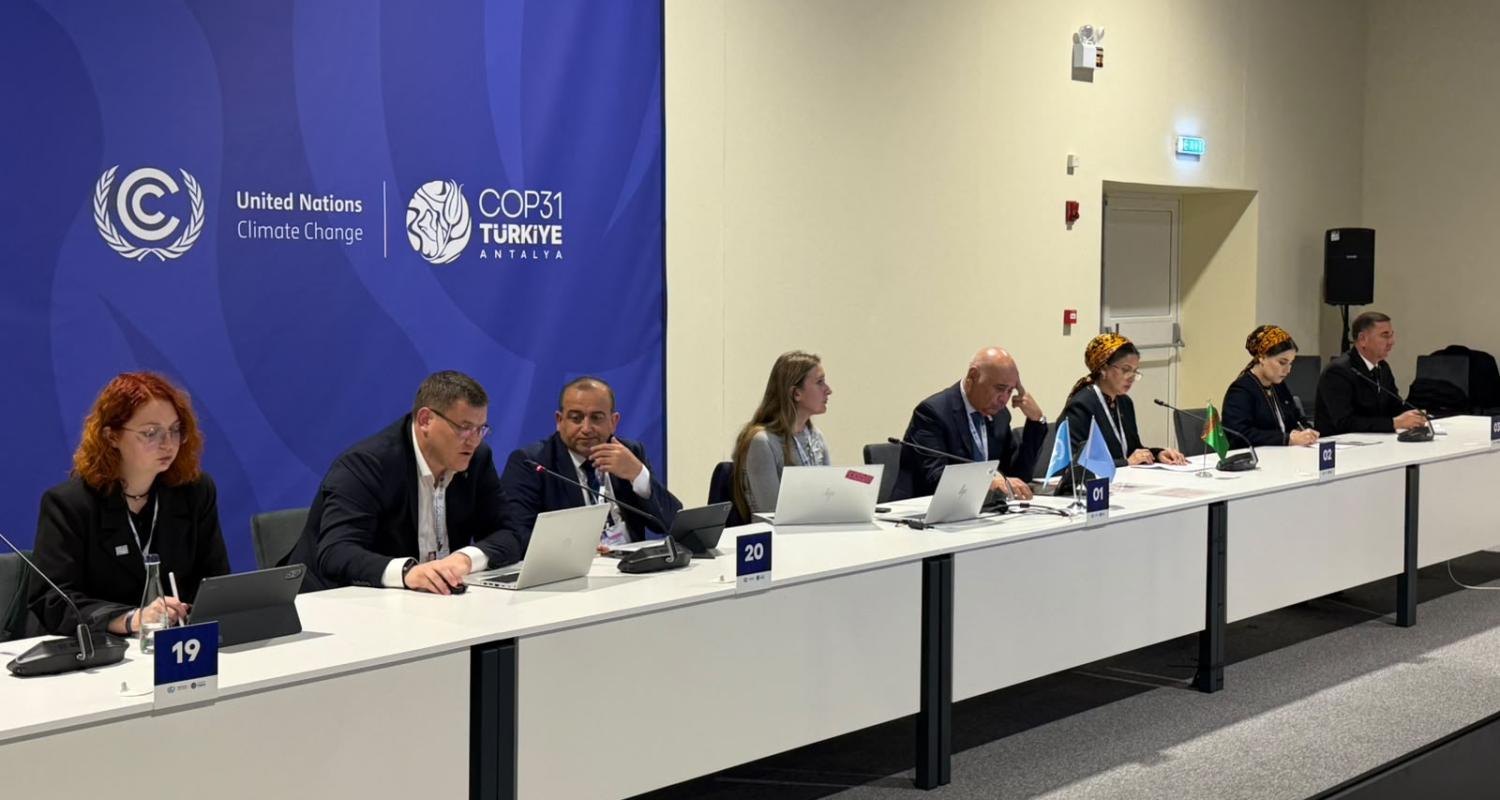
A thematic session at the Turkmenistan Pavilion at COP31 focused on cutting methane emissions through the Regional Climate Technology Centre for Central Asia, and on preparing the country’s first Biennial Transparency Report (BTR), which consolidates greenhouse gas emission data. Maral Kuliyeva, Rector of the International University for the Humanities and Development (IUHD), delivered the presentation. As noted during the discussion, Turkmenistan’s Biennial Transparency Report consolidates greenhouse gas emission data and tracks progress toward achieving the Nationally Determined Contributions (NDCs). Participants stressed that effective monitoring requires a new type of specialist with interdisciplinary skills in energy, agriculture and water management. Speaking about the initiative to set up the centre in Ashgabat, Maral Kuliyeva said it will open new opportunities for introducing water-saving technologies, developing renewable energy and reducing methane emissions. According to the IUHD Rector, universities should create conditions for young people to acquire skills in data collection, verification and analysis needed by the public and private sectors. Session participants included representatives of the Food and Agriculture Organization of the United Nations (FAO), the Ministry of Environmental Protection of Turkmenistan and the Scientific Information Centre of the Interstate Commission for Sustainable Development of the International Fund for Saving the Aral Sea (ICSD IFAS). The session also addressed the results of the Capacity-building Initiative for Transparency (CBIT).


Turkmenistan at COP31 discusses methane reduction and greenhouse gas accounting in its first Transparency Report
11 Nov 26